The Breed
Livestock guardian dog breeds: which one is right for your farm?
A livestock guardian dog is a large dog that lives with what it protects and drives off predators. Published research finds little difference between breeds in how well they protect. The differences that matter are coat, size, temperament, and the individual dog and its parents.
Why people get a guardian dog
Most of what is written about these dogs is written for sheep ranchers, because that is who the studies followed. Most of the people who contact us are not sheep ranchers. They have a few acres or a few hundred, and they want one dog that looks after the whole place. In our experience the reasons come down to five:
- To guard the property and the family.
- To protect livestock such as sheep and goats.
- To protect poultry and pets.
- For the companionship of a dog that lives and works alongside them on the farm.
- Because they admire the breed for its size, its presence and its reputation.
Most buyers have more than one of these. None is a wrong reason. Each one asks something different of the dog and of the owner, and the rest of this page is written with all five in mind.
What is a livestock guardian dog?
Livestock guardian dogs are not herding dogs. A herding dog moves stock on a handler’s signals. A guardian dog works on its own, stays with the animals without harming them, and repels predators. The USDA describes the behavior as largely instinctive, brought out by rearing the pup with livestock. Texas A&M AgriLife Extension says the dogs protect in three ways: by holding territory, by barking and posturing, and, if needed, by confronting the predator.
What every guardian breed needs
Before the breeds, three things are true of all of them.
About two years of supervision. None of these dogs is finished as a puppy. Texas A&M puts it at 18 to 24 months before a pup is an effective guardian, and the USDA says a young dog will almost certainly make mistakes in its first several months with stock. That goes for every breed on this page. A big adolescent that plays rough can injure or kill the animals it will later protect. Owners tell us poultry takes the longest.
A real fence. Any of these dogs may roam if nothing stops it. Owners of every breed say the same thing: the fence comes before the dog.
An owner who makes the introductions. These dogs decide for themselves what belongs on the place and what does not, and they learn it from you. In our experience a visitor needs a personal introduction, and a new animal needs to be shown to the dog as part of the farm. The dog learns how the family receives people through practice and repetition, with the owner showing the way.
The six breeds side by side
| Anatolian | Kangal | Great Pyrenees | Akbash | Maremma | Boz | |
|---|---|---|---|---|---|---|
| Origin | Guards flocks on the Central Anatolian Plateau; probably descended from the large hunting dogs of Mesopotamia (UKC) | Turkey; named for the Kangal District of Sivas Province | Pyrenees Mountains on the France-Spain border | Western Turkey | Italy; Maremma and Abruzzo regions | No major registry standard |
| Recognized by | AKC; UKC; The Kennel Club (UK) | UKC; FCI; The Kennel Club (UK). Not on the AKC breed list | AKC; UKC; FCI; The Kennel Club (UK) | UKC. Not on the AKC breed list | FCI; UKC; The Kennel Club (UK). Not on the AKC breed list | No major registry standard |
| Male height | 29 inches and up (AKC); 29 to 32 inches (UKC) | typically 29 to 33 inches (UKC, 2023); 28.3 to 30.7 inches, with a tolerance of 2 cm either way (FCI) | 27 to 32 inches (AKC) | 30 to 34 inches (UKC) | 25.5 to 28.75 inches (UKC); 26.4 to 28.9 inches (FCI, 2025) | No major registry standard |
| Male weight | 110 to 150 lb (AKC); 110 to 143 lb (UKC) | typically 110 to 145 lb (UKC); 106 to 132 lb (FCI) | about 100 lb at 27 inches (AKC) | about 120 lb on average (UKC) | 77 to 100 lb (UKC); 88 to 115 lb (FCI, 2025) | No major registry standard |
| Coat | short (1 inch minimum) to rough (about 4 inches), thick undercoat | fairly short double coat | long, thick outer coat over a dense woolly undercoat | double coat, medium or long | long, harsh, flat-lying coat, up to 3 inches on the body | No major registry standard |
| Color | any color (AKC) | solid cream to pale tan or fawn, black or dark mask (UKC); fawn to wolf sable, black mask (FCI) | white, or white with gray, badger, reddish brown or tan markings | always white | solid white; ivory, pale orange or lemon shading tolerated | No major registry standard |
We raise Anatolian Shepherds and have never worked the other five breeds. What we say about them comes from breed standards, published research and what owners say.
Anatolian Shepherd
This is the breed we raise, so it is the one we can speak for. Our Anatolians are loyal, protective, loving, intelligent, and independent with strong wills.
The AKC standard calls for males from 29 inches and 110 to 150 pounds, a coat from one inch to about four, and any color. Tucker stands 33 inches and weighs 130 pounds. Bailey is 29 inches and about 100 pounds. Both are fawn with black masks and short coats.
What we like most is how they think. Our dogs track everything on the farm, all the time. They know what is normal and what is not. They know a visitor we greet at the front gate from something that does not belong. Our farm cats live with them and eat out of the same bowl, and the same dogs have killed stray feral cats that came onto the property. They watch the sky too: hawks, crows, eagles, airplanes. They run the birds of prey off.
They are athletic for their size. Tucker sounds like a horse when he runs by at full speed. They are also affectionate with their own people. Bailey is the alpha of our pack, and she leans into a hug.
We do not see predators on our place. We hear the dogs working, and we know they are doing their job. Texas A&M says barking is one of the three ways these dogs protect: they hold territory, they bark and posture, and only if needed do they confront a predator. If we saw the predators, the dogs would not be doing their job.
The breed club says the coat needs little care except during seasonal shedding, when it calls for a thorough brushing. In our experience the shedding is just the undercoat and it is no big deal. We brush a dog when it needs it.
The costs are real. An Anatolian is a lot of dog, and owners and breeders alike say it is the wrong dog for most people. Ours squabble with each other over food and attention. The males bark at night. A dog that decides for itself about a stray cat will decide other things for itself too. The USDA says the guarding breeds were selected to act on their own, where other breeds were selected to respond to people. So these dogs do not like to be micromanaged, and they should not be. Training is one thing and standing over the dog is another. An Anatolian needs to be taught what belongs on the place, then given the freedom to do the job. Every one of them has quirks, and there are ways of working with them.
Great Pyrenees
We have never worked a Great Pyrenees. What follows comes from published research and from what owners say.
The Great Pyrenees is the guardian breed most Americans know. In a 1986 University of Idaho survey of producers in the US and Canada, it made up 57 percent of 763 dogs. The AKC standard calls for males 27 to 32 inches, with a long, thick outer coat over a dense woolly undercoat.
Its reputation is for being easy on people and stock. In that survey, 7 percent of Great Pyrenees were reported aggressive to sheep and 4 percent to people, the lowest of the five breeds counted. Bill Costanzo, the livestock guardian dog program specialist at Texas A&M AgriLife, puts the breed’s popularity down to a milder temper with people and stock, and places it with smaller flocks and in settled areas. Owners describe the same dog: gentle, and more willing to take direction.
The complaints owners raise most are roaming, barking at night and the coat. Costanzo notes that some ranchers steer away from the breed over roaming. Owners who have kept both breeds do not agree on which one roams farther. One New York shepherd, writing for Cornell’s small farms program, says Great Pyrenees and Maremmas keep nearer the flock, while Akbash and Anatolians range the property more. Texas A&M warns that the long coat can be a problem in hot climates and says grooming is essential for long-haired dogs there.
A Great Pyrenees suits someone who wants a calmer dog around neighbors and visitors, has good fences, and does not mind the brushing or the barking. We compare the two breeds in full on our comparison page.
Kangal
We raise AKC Anatolian Shepherds and have not worked a dog registered as a Kangal. What follows comes from the standards, published research and what owners and breeders say.
The Kangal is the black-masked flock dog named for the Kangal District of Sivas Province in Turkey. The UKC and FCI each publish a Kangal standard, and The Kennel Club (UK) has a Turkish Kangal Dog standard. The AKC breed list has no Kangal entry. The UKC standard calls for a fairly short double coat in a solid color from cream to pale tan or fawn, with a black or dark mask. The FCI standard gives fawn to wolf sable with a black mask.
Whether the Kangal and the Anatolian are one breed or two is argued hard, here and in Turkey. Breeders and owners split three ways: the same breed, a regional type within the Anatolian, or a separate Turkish breed with the Anatolian as an American mix of types. We lay that question out on our comparison page.
In a USDA and Utah State University study on western sheep ranges, one statistical model linked Kangals, some imported from Turkey and some bought from US breeders, with nearly 60 percent lower risk of sheep predation than mixed white guardian dogs. A second model in the same paper found no significant overall effect. No advantage was shown against wolves or grizzly bears.
Bill Costanzo at Texas A&M AgriLife treats the Kangal and the Anatolian together: independent and athletic, at home covering the perimeter of a large place, and more work to manage where neighbors are close unless the dog is socialized with care.
A Kangal suits the same owner an Anatolian does. The name carries weight with buyers, so look at the parents and not the label.
Akbash
The Akbash is a white guardian dog from western Turkey. The UKC is the only major registry where we found a standard. It calls for males 30 to 34 inches and about 120 pounds, always white, in a medium or long double coat. Texas A&M says the Akbash is considered one of the most aggressive and protective breeds for sheep and goats. In the producer survey, 100 percent of 62 Akbash were rated aggressive to predators and 20 percent aggressive to sheep. Bill Costanzo at Texas A&M AgriLife describes the breed as often having little patience with other dogs.
An Akbash suits a place with real predator pressure and an owner ready to manage a hard dog around other dogs.
Maremma
The Maremma is the white flock dog of Italy. By the standards it is the shortest breed here. The UKC calls for males 25.5 to 28.75 inches and 77 to 100 pounds. Costanzo groups Maremmas with the breeds that keep near their stock and bond to it strongly. The Maremma Sheepdog Club of America does not recommend the breed as a pet and says it matures into a full guardian at about two years. Owners in the Anatolian groups often point a first-time buyer toward a Maremma or a Great Pyrenees.
A Maremma suits smaller acreage where the dog should stay close to the animals, and it is one of the breeds owners suggest for a first guardian dog. The long white coat needs upkeep.
Boz
We have not worked a Boz. The name is used for a large flock dog from southern Turkey, also called the Gureh, raised around Şanlıurfa. The AKC, UKC and FCI have no Boz standard.
The traditional dog and the dog sold under the name are not the same size. A 2012 Harran University study measured 44 working dogs around Bozova. Males averaged 77.8 centimeters at the shoulder, about 30.6 inches, and 48.3 kilograms, about 106 pounds. Boz advertised in the United States have been listed at 150 to 260 pounds.
Where the extra size came from is disputed. Sellers call the Boz an ancient landrace. One American importer’s own breed profile guessed at a mix of Kangal or Yörük dog and Malaklı, the heavy dog also called the Turkish Mastiff. We found no genetic study that settles it, no published research on the Boz as a working guardian, and no hip or elbow data.
If you are considering one, weigh and measure the parents, ask for their hip and elbow results, and watch them move.
Bold with strangers, gentle at home
Most people who contact us want the same dog: bold toward anything that does not belong, gentle with everyone who does. That dog is real. We live with it.
It is not automatic. The guarding half shows up on its own. A guardian dog will challenge a stranger whether you want it to or not. Ours go nuts when someone comes onto the property. The risk is a dog left to judge a harmless stranger by itself, such as someone making a delivery or a neighbor at the gate. That call belongs to the owner, not the dog. An invisible fence does not make it for you, because it keeps nobody out.
The gentle half needs teaching too. Food, mouthing that goes unchecked, and animals the dog has not been introduced to are the usual trouble spots. In our experience most Anatolian pups mouth, and it has to be curbed early.
The homes where it works have things in common: a physical fence, a plan for deliveries, an owner who meets every visitor and makes the introduction, and every new animal shown to the dog as part of the place. If you want this dog, that is the job.
Which livestock guardian breed is best for chickens?
No study we found ranks guardian breeds for poultry. The main US sources we read, from USDA and Texas A&M, cover sheep and goats and do not address chickens. In a 2023 paper, a survey of 59 poultry keepers found Maremmas were 56 percent of the dogs in use, and it found no difference in ongoing predator problems between Maremmas and other breeds. Oklahoma State Extension names the Great Pyrenees as a guard for free-range birds against larger mammals, but not snakes or rodents.
What owners say is consistent across breeds. Poultry is the hardest stock for a young guardian dog, and it takes the longest. Owners of every breed describe young dogs killing birds, and the figure they pass on most is 18 to 24 months before a dog can be trusted alone with them.
Our own Anatolians were raised with laying hens. Our hens were pasture raised inside mobile fencing, and we lost none to predators while the dogs were on the job. The dogs also watch the sky and run birds of prey off.
Which is best for sheep?
Sheep are where most of the research is, and it does not crown a breed.
A large producer survey covered 763 dogs in the US and Canada in 1986. In each of five breeds, 69 to 77 percent of dogs were rated very effective, and USDA reported that the rate of success among the breeds was not different.
A Colorado study in the 1990s reached much the same result among 119 producers who each ran a single breed: effectiveness ratings did not differ by breed, and losses to most predators did not either. Producers who had run more than one breed rated Akbash above Great Pyrenees, and generally rated Anatolians above Great Pyrenees too, though the author said too few of them had Anatolians to be sure.
A 2018 study on sheep range in five western states tested 84 dogs with a wolf decoy and a deer decoy. It found few differences between breeds, and its authors concluded that breed may matter less than people assume. That study included Kangals but not Anatolians.
Where the surveys did find differences was in temperament. In the 1986 survey, Great Pyrenees were least often reported aggressive to sheep (7 percent), against 14 percent for Anatolians and 20 percent for Akbash and Maremma. In Colorado, producers rated Akbash more aggressive than Great Pyrenees and rated Anatolians faster.
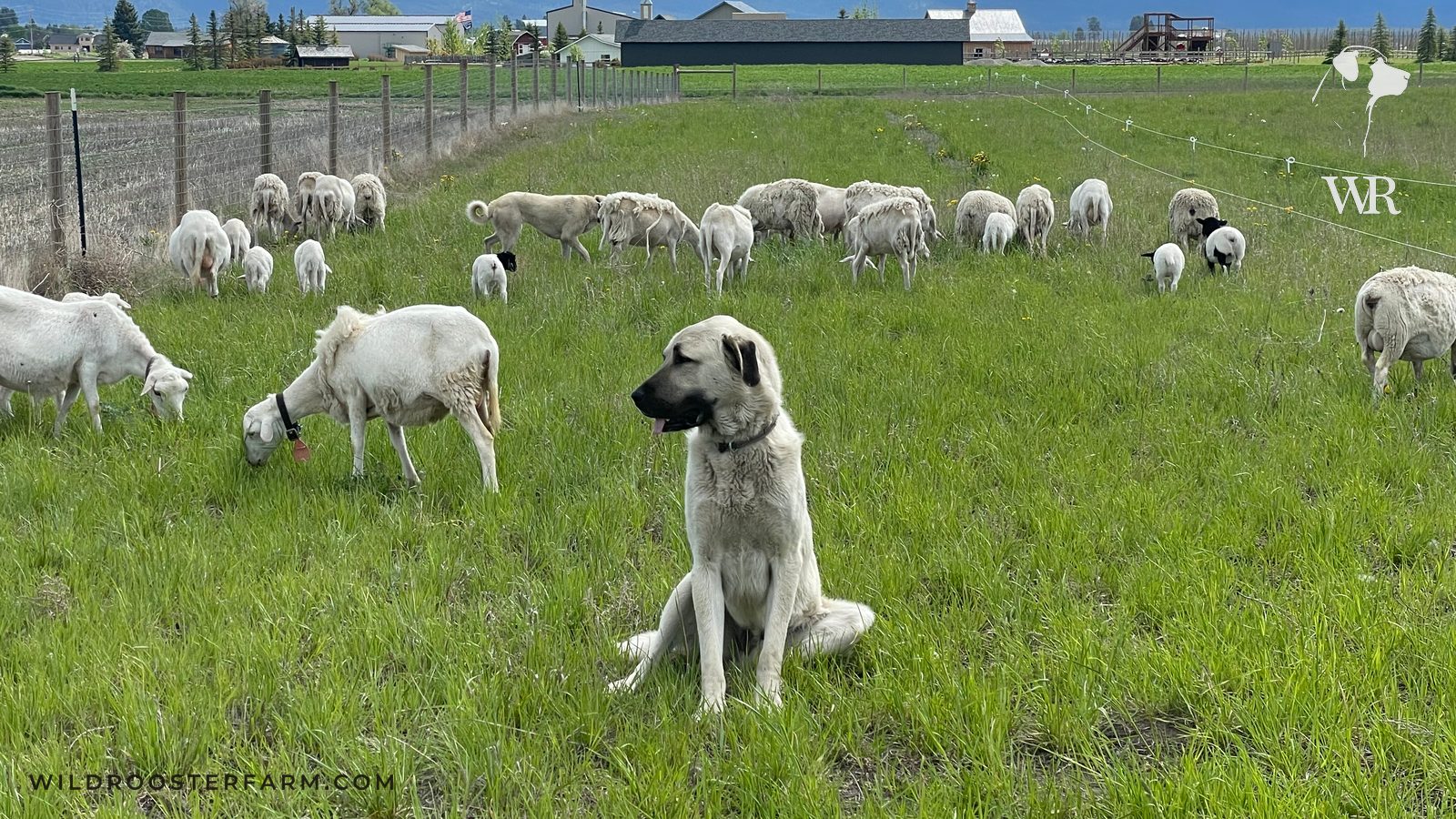
Our own Anatolians live with hair sheep.
Which is best for goats?
We found no research that compares guardian breeds on goats. USDA says the methods in its sheep bulletin carry over to most other livestock, goats included. Texas A&M treats sheep and goats together. It recommends one to two dogs per 100 ewes or nannies and describes the Akbash as one of the most aggressive and protective breeds for small ruminants. Akbash Dogs International says the breed is used with goats. Beyond that, the sheep evidence is the best guide available, and it does not crown a breed.
The dog matters more than the breed
Everything above describes breeds. What you bring home is one dog. The USDA and Texas A&M both say dogs vary widely within a breed, and Ontario’s agriculture ministry finds little evidence that any one breed stops more predation than another. Bill Costanzo at Texas A&M AgriLife says the differences between individual dogs are bigger than the differences between breeds, as long as the dog is well bred and started right.
So look hard at the parents. See them on their own ground with their own animals. Ask for their hip and elbow results. Ask what the breeder does if a dog does not work out. Then decide whether you are the right owner for that dog.
You can meet ours on the Our Dogs page.
The information on this page is general information about the breed, drawn from the sources listed and from our own experience. Individual dogs vary. Nothing here is a guarantee about the health, size, temperament or working ability of any particular puppy. The terms of any sale are those in our written contract.
Sources
- AKC Official Standard of the Anatolian Shepherd Dog
- UKC Anatolian Shepherd standard (revised April 1, 1998)
- UKC Kangal Dog standard (revised January 2, 2023)
- FCI Standard No. 331, Kangal Shepherd Dog (2018)
- AKC Official Standard of the Great Pyrenees
- UKC Great Pyrenees standard
- FCI breed page, Pyrenean Mountain Dog No. 137
- UKC Akbash Dog standard (revised April 1, 1998)
- Akbash Dogs International, Working Dogs
- UKC Maremma Sheepdog standard (revised May 1, 2017)
- FCI Standard No. 201, Cane da pastore Abruzzese Maremmano (December 2025)
- Maremma Sheepdog Club of America, What is a Maremma Sheepdog?
- The Kennel Club (UK) standards: Anatolian Shepherd Dog, Turkish Kangal Dog, Maremma Sheepdog, Pyrenean Mountain Dog
- UKC Breed Standards list
- FCI Group 2 nomenclature
- FCI Group 1 nomenclature
- Green and Woodruff, “Livestock Guarding Dogs: Protecting Sheep from Predators,” USDA APHIS Agriculture Information Bulletin 588
- Ontario Ministry of Agriculture, “Livestock guardian dogs: selection and training”
- Texas A&M AgriLife, “Livestock Guardian Dogs: An Overview,” ANSC-PU-468
- Kinka and Young 2019, Rangeland Ecology and Management (readable copy)
- McKellar, Kreplins and Fleming 2023, “Chicken’s best friend? Livestock guardian dog bonding with free-ranging chickens,” Translational Animal Science 7(1)
- Oklahoma State University Extension, “Protecting Small Poultry Flocks from Predators”
- Bill Costanzo, “Guardians That Fit the Land”, Farmers Hot Line, 2026
- Ulf Kintzel, “Guardian Dogs for Sheep”, Cornell Small Farms, July 2020
- Noble Research Institute, “How to Select and Train Good Guardian Dogs for Your Ranch”
- Yertürk and Bozkaya, “Some Morphological Characteristics of Bozova Dogs (Gureh)”, Harran University, 2012
- Aksaray University, “Aksaray Malaklısı”, 2021
- Andelt, “Relative Effectiveness of Guarding-Dog Breeds to Deter Predation on Domestic Sheep in Colorado”, 1999
- Kinka and Young, “A Livestock Guardian Dog by Any Other Name: Similar Response to Wolves Across Livestock Guardian Dog Breeds”, Rangeland Ecology and Management, 2018