
Livestock and Predators
Is one Anatolian Shepherd enough to handle predators?
Sometimes, for a small flock close to the house with light predator pressure. Most guidance favors two or more dogs, and more again where wolves, bears or mountain lions are present.
Texas A&M AgriLife gives a guideline of one to two dogs per 100 ewes or nannies. Where wolves, bears or mountain lions are present, it says producers may need more, such as one to two dogs per 50. It prefers two dogs except for small flocks near the house, so protection continues if one dog is lost. A USDA bulletin says one dog is usually enough for most pasture operations where predators are scarce, and suggests adding a second dog once the first is established.
Wolves change the answer. A review by federal wolf managers and colleagues in the northern Rockies says the usual result of one dog fighting a wolf pack is a dead dog. It recommends multiple dogs with people nearby. An Idaho project that kept wolf losses low encouraged producers to run at least three dogs per sheep band.
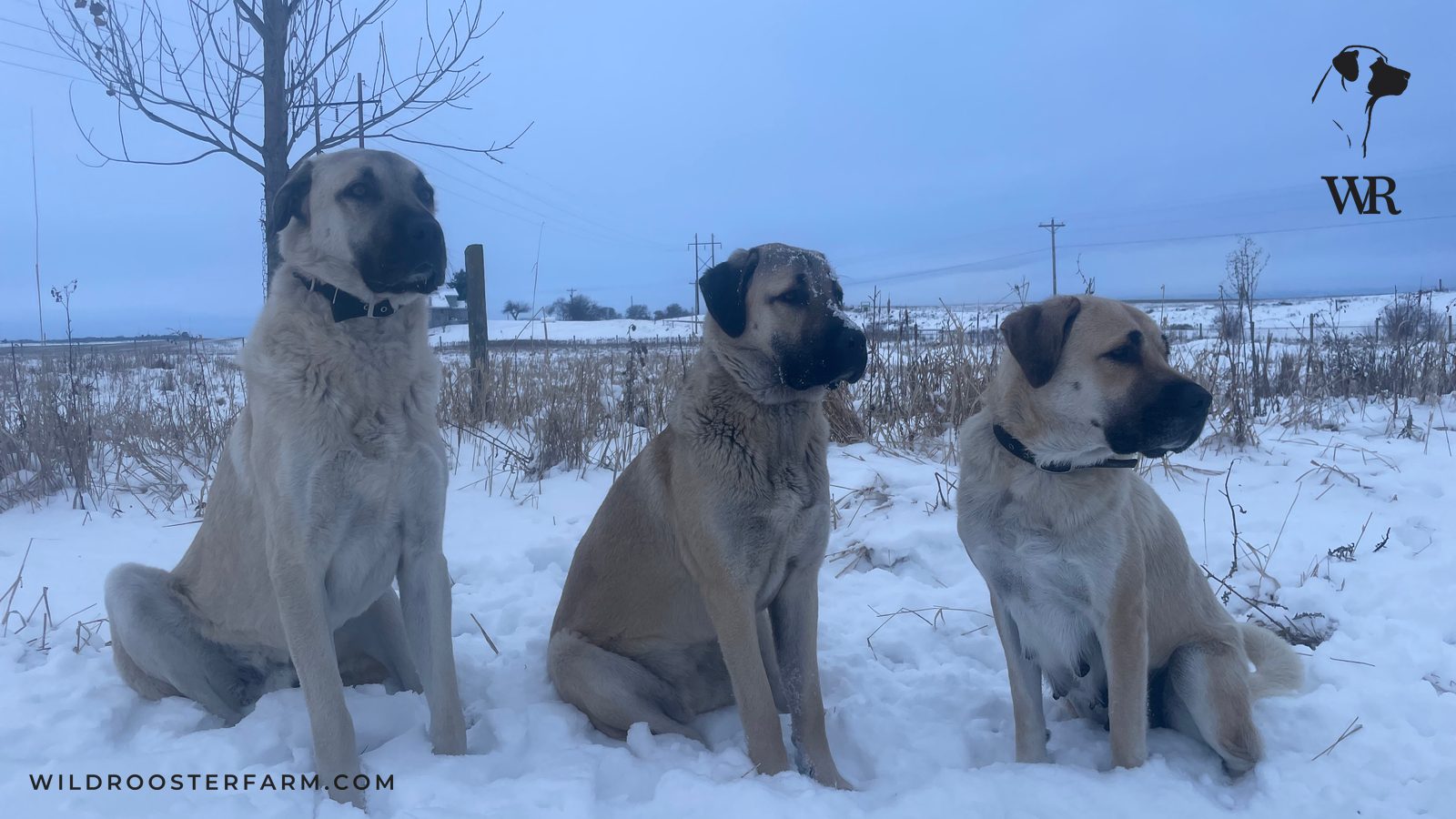
We keep three full-grown Anatolians and two youngsters.
The information on this page is general information about the breed, drawn from the sources listed and from our own experience. Individual dogs vary. Nothing here is a guarantee about the health, size, temperament or working ability of any particular puppy. The terms of any sale are those in our written contract.
Sources
- Texas A&M AgriLife, “Livestock Guardian Dogs: An Overview,” ANSC-PU-468
- Green and Woodruff, “Livestock Guarding Dogs: Protecting Sheep from Predators,” USDA Agriculture Information Bulletin 588 (revised 1996)
- Bangs et al. 2005, “Livestock Guarding Dogs and Wolves in the Northern Rocky Mountains of the United States,” Carnivore Damage Prevention News 8
- Stone et al. 2017, “Adaptive use of nonlethal strategies for minimizing wolf-sheep conflict in Idaho,” Journal of Mammalogy 98(1)